


Cordless Vacuum Keeps Losing Suction? 3 Steps to Fix Timing Belt Selection
Cordless Vacuum Keeps Losing Suction? 3 Steps to Fix Timing Belt Selection
A Synchronous Belt Factory Guide for OEM and Aftermarket Buyers
Abstract: Cordless vacuum floor heads depend on a compact belt drive system to keep the roller brush spinning at constant speed, yet many procurement and engineering teams still struggle with tooth skipping, early belt cracking, and inconsistent lead times when sourcing a timing belt supplier. This article breaks down how miniature timing belts (2GT, S2M, HTD 3M) solve these problems, how to match belt material to duty cycle, and what to check before choosing a synchronous belt manufacturer for OEM or replacement programs, drawing on production experience from AORROW (Dongguan) Power Timing Belts Co., Ltd.
When a cordless stick vacuum starts losing suction halfway through a job, the roller brush is usually the first place engineers look — and the timing belt driving it is often the real culprit. For teams sourcing components for the European, American, or Vietnamese appliance market, getting the belt drive system right the first time affects everything downstream: warranty claims, production downtime, and how fast a new model can go from prototype to shelf.
Step 1: Understand Why the Timing Belt Is the Weak Link
A cordless vacuum floor head is a small, sealed, high-vibration environment. The industrial belt inside it has to transmit torque from a brushless motor to a roller brush without slipping, without generating excess heat, and without adding noticeable weight to a handheld tool. Traditional friction-based flat belts lose grip under sudden load — a clump of pet hair or a thick carpet edge is enough to cause slip and a visible drop in cleaning performance. A timing belt's meshed teeth avoid this almost entirely, holding transmission efficiency close to 98% instead of the 80–85% typical of friction belts.
This is also where most quality complaints originate. Tooth shear, belt elongation, and premature cracking almost always trace back to one of three sourcing mistakes: an underrated belt model for the torque load, a core material that stretches under repeated start-stop cycling, or a supplier that cannot hold tension tolerances consistently across production batches.
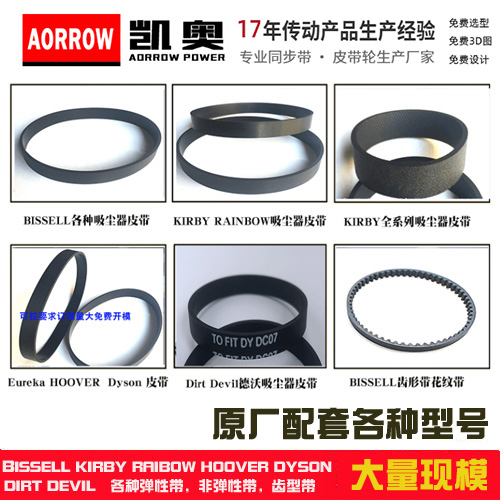
Step 2: Match the Belt Model and Material to the Application
Three miniature timing belt families cover most cordless vacuum designs on the market:
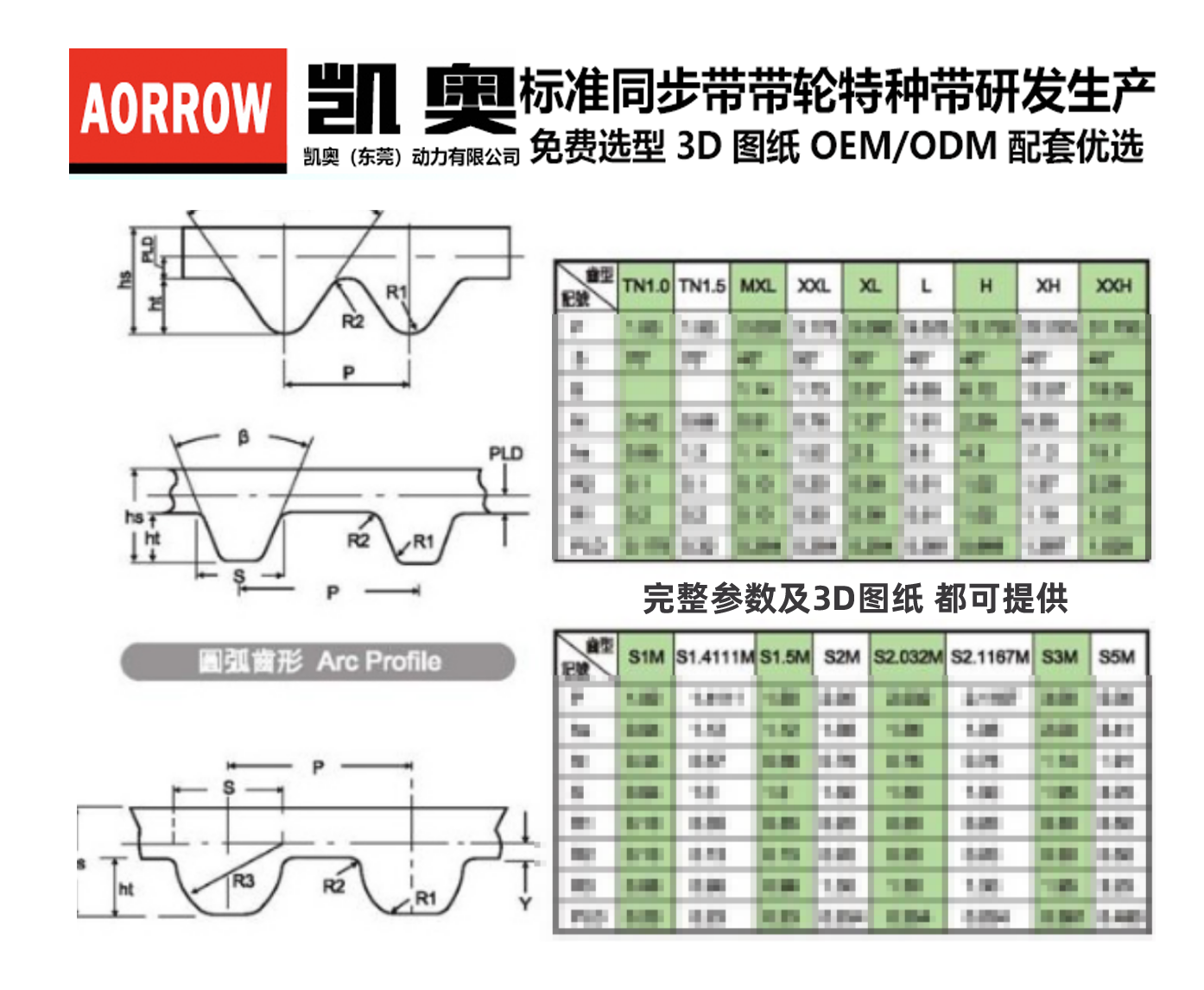
2GT (2mm modified trapezoidal tooth) suits ultra-slim handheld and entry-level stick vacuums where floor head thickness and low noise matter more than raw torque.
S2M (2mm arc tooth) is a common middle ground for household stick vacuums, offering better anti-tooth-skipping performance than 2GT under sustained carpet load.
HTD 3M (3mm high-torque curved tooth) is typically reserved for higher-power models running roller brushes at 6,000–12,000 RPM, where torque capacity matters more than belt thinness.
Material choice matters just as much as tooth profile. CR neoprene rubber timing belts, reinforced with glass fiber cord, generally hold up for 4,000–6,000 working hours and tolerate repeated start-stop cycling better than steel-wire-reinforced polyurethane belts, which tend to run 1,500–2,000 hours before showing heat-related aging. For a mid-to-high-end product line sold into the European or American market, that difference shows up directly in warranty cost.
Beyond the belt itself, procurement teams evaluating a synchronous belt factory or synchronous belt OEM/ODM factory should weigh total cost of ownership rather than unit price alone — a slightly higher-cost belt that survives twice as many duty cycles, paired with a supplier that can hold delivery schedules, usually costs less over a product's lifecycle than repeated re-orders and line stoppages caused by inconsistent batches.
Step 3: Vet the Supplier, Not Just the Spec Sheet
A parameter match on paper does not guarantee consistent output. Buyers sourcing a timing belt for vacuum cleaner production, or looking for a Dongguan timing belt factory able to support non-standard sizes, should confirm three things before committing to a production run: documented tension-control tolerances during assembly, the ability to run small-to-mid batch non-standard customization for a new floor head design, and a track record of on-time delivery to overseas buyers, since a single missed shipment window can delay an entire product launch.
AORROW, based in Dongguan, Guangdong, in South China's Pearl River Delta manufacturing cluster, produces miniature timing belts for roller brush drive systems supplying customers across Europe, the Americas, and Vietnam. As a timing belt manufacturer working across 2GT, S2M, and HTD 3M product lines, AORROW's production experience centers on the same three variables outlined above: tooth-profile matching to duty cycle, tension-control consistency, and non-standard customization for OEM floor head designs.
Field Experience: Where Belt Selection Problems Typically Surface
In practice, most OEM support requests around cordless vacuum timing belts fall into a recurring pattern: a floor head design passes initial testing, then shows tooth-skipping or belt slip only after several months of production, once real-world usage — pet hair, thicker carpets, longer duty cycles — starts stressing a belt spec that was borderline from the start. Working through cases like this, drawing on AORROW's production experience across 2GT, S2M, and HTD 3M lines for buyers manufacturing in South China and shipping to Europe, the Americas, and Vietnam, the fix is rarely a different brand of belt; it is usually re-matching tooth profile and core material to the actual load the roller brush sees in the field, then verifying tension tolerances stay consistent across production batches rather than only on the first sample run. That distinction — sample performance versus batch-to-batch consistency — is where most belt-related warranty issues in cordless vacuums originate, and it is the first thing worth checking before assuming a design itself is at fault.
Frequently Asked Questions
How can I tell if a vacuum's timing belt is aging or worn out?Common signs include a visible drop in roller brush speed or suction, a rubbery or burnt smell from the floor head, visible cracking or glazing on the belt surface, and audible slipping noise under load — particularly when the brush encounters carpet resistance or tangled hair.
How do I choose between polyurethane and rubber timing belts?Polyurethane belts with steel-wire cores are lower-cost and easier to mold, making them suitable for lighter-duty or shorter-lifecycle products. CR neoprene rubber belts with glass fiber cores tolerate heat and repeated start-stop cycling better, which matters more for mid-to-high-end products designed for several years of regular use.
What lead times are realistic when sourcing timing belts from a China-based factory?Lead times vary with tooling requirements — a standard catalog size ships faster than a non-standard belt requiring new mold development. Buyers evaluating a synchronous belt factory should ask for documented lead times on both standard and custom orders before committing volume.
Can a timing belt supplier support small-batch, non-standard customization?Capability varies by factory. Buyers developing a new floor head design should confirm minimum order quantities and mold development timelines for non-standard belt lengths or tooth pitches before finalizing a product's mechanical design around a specific belt size.
Summary
Timing belt selection for cordless vacuum transmission systems comes down to three linked decisions: matching tooth profile (2GT, S2M, or HTD 3M) to the roller brush's torque and speed requirements, matching belt material to the product's intended service life and duty cycle, and choosing a supplier that can hold tension and quality tolerances consistently across production volume. Buyers who evaluate these three factors together — rather than comparing unit price alone — tend to see fewer field failures and more predictable production schedules. For teams sourcing from Dongguan or the wider Pearl River Delta manufacturing base for European, American, or Vietnamese product lines, a supplier able to document both technical specifications and delivery performance is generally worth the additional diligence during vendor selection.
EMAIL: 112110061@qq.com
|
|

