


Why Vacuum Cleaners Use Synchronous Belts
Why Vacuum Cleaners Use Synchronous Belts
Inside most upright and many canister vacuum cleaners with a powered brush roll, the motor needs to transfer rotational force to the rotating brush bar that agitates carpet fibers. This connection is typically made in one of two ways:
Direct drive — the brush roll is mounted directly on the motor shaft (no belt)
Belt drive — a belt connects the motor shaft to the brush roll
Synchronous belts are the preferred belt-drive solution because they offer:
No slippage — the toothed engagement keeps the brush roll spinning at a consistent speed even under load (e.g., pushing through thick carpet)
Consistent cleaning performance — since RPM doesn't drop under resistance the way it can with friction belts, suction and agitation stay steady
Quieter operation — compared to some gear-drive systems
Compact design — belts allow motor placement away from the brush roll, giving engineers more flexibility in vacuum body design
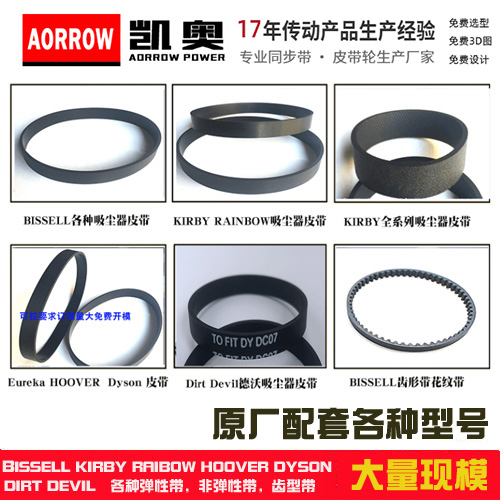
Lower cost and easy replacement — belts are cheap to manufacture and simple for consumers to swap themselves, which is exactly why they're one of the top searched vacuum replacement parts on Amazon
Where the Belt Sits in the Vacuum
In a typical upright vacuum:
The belt loops around a small pulley on the motor shaft and a larger pulley on the brush roll shaft
This size difference creates a gear-reduction effect, spinning the brush roll at the correct RPM for effective carpet agitation without needing a separate gearbox
The belt sits under the base plate, accessible by removing the bottom cover or brush roll compartment — which is why "how do I change my vacuum belt" is such a common search term
Common Failure Points (Useful for Product Descriptions & FAQs)
Sellers can proactively address these in listings to reduce return rates and improve buyer confidence:
Stretching over time — rubber degrades and loses tension, causing reduced brush roll speed
Snapping — often caused by tangled hair, string, or debris jamming the brush roll and putting sudden strain on the belt
Glazing — a shiny, hardened surface from heat exposure, which reduces grip even though the belt looks intact
Wrong sizing — the most common reason for negative reviews; belts must match the exact length, width, and tooth pitch of the OEM part
Tips for Writing Better Amazon Listings
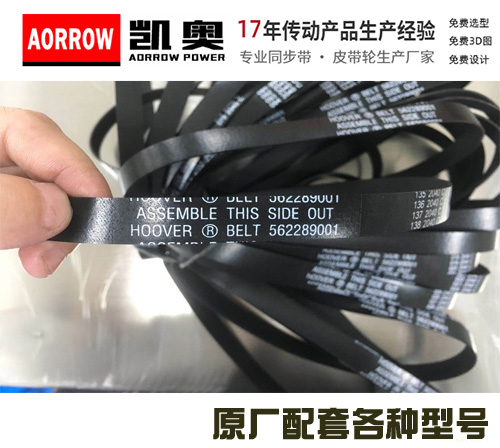
Specify the belt type clearly: "Flat toothed synchronous drive belt" vs. generic "vacuum belt" helps with search relevance and buyer certainty.
List compatible models explicitly rather than just brand names — buyers cross-reference model numbers more than brand.
Include belt dimensions (length, width, tooth pitch/count if known) since many searches are dimension-driven for universal-fit buyers.
Mention material and reinforcement (e.g., "fiberglass-reinforced rubber") — this signals durability versus cheaper unreinforced belts.
Add a simple install note or diagram in images — reduces buyer hesitation and returns due to installation confusion.
Address common failure modes in bullet points (e.g., "resists stretching and glazing under heavy use") to preemptively answer buyer concerns.
Keyword Ideas for Listings
Vacuum cleaner replacement belt
Synchronous drive belt vacuum
Toothed timing belt vacuum cleaner
Vacuum brush roll belt
Geared vacuum belt [brand/model]
Vacuum belt replacement kit
Conclusion
Synchronous belts are a small but critical component that directly affects a vacuum's cleaning performance, making them one of the most frequently replaced parts and a steady category for Amazon sellers. Clear, technically accurate listings — paired with attention to sizing and common failure points — help sellers stand out, reduce returns, and build trust with repeat buyers in the replacement parts space.

|
|

